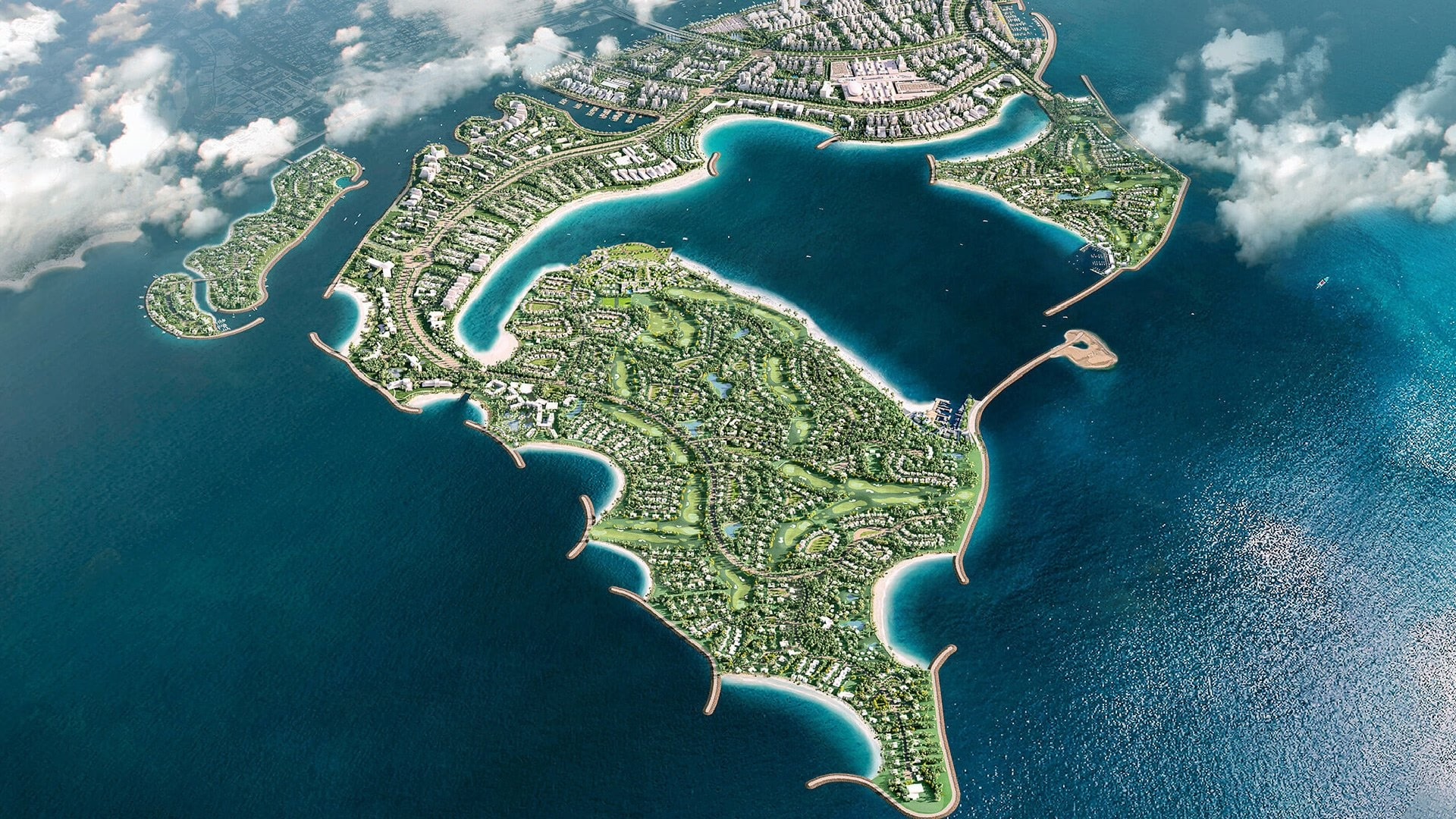
If you want rent landing in your account next quarter, buy in JBR, not Dubai Islands. JBR is cheaper per square foot, cheaper to run, and higher yielding, all three, right now. Dubai Islands is only cheaper than Palm and Emaar, not than JBR. I am a Dubai Islands broker telling you that, because it is true, and because the case for Dubai Islands here is real and needs no invented numbers.
Weigh it against off-plan homes on the islands as a whole, not one tower in isolation.
Every figure is from DLD, read on 29 August 2026. Here they are together.
| Dubai Islands | JBR | |
|---|---|---|
| Price per sq.ft (DLD median) | AED 2,850 ▲ 17% YoY | AED 1,680 ▼ 8% YoY |
| Median price (DLD) | AED 2.89M | AED 2.65M |
| Gross rental yield (DLD) | No record yet | 9% |
| Net long-let yield, after costs | No record yet | ~6.5% |
| Service charge per sq.ft | AED 24 | AED 15.4 |
| Stock and status | Off-plan, delivering 2025–2029 | Delivered 2007 |
| Drive to Dubai International | 10–15 min | ~30 min |
| How you buy | Off-plan, developer payment plans (50/50, 60/40) | Secondary market, mortgageable |
Source: the full price and rent benchmark.
On the numbers, JBR wins. So I will say it plainly.
JBR is AED 1,680 per square foot against Dubai Islands at 2,850, so Dubai Islands is about 70 percent more expensive, roughly AED 1.17M more on a 1,000 square foot apartment. JBR’s service charge is AED 15.4 against my AED 24 model for Dubai Islands. And JBR’s DLD gross yield is 9 percent, netting after costs to about 6.5 percent, the highest of any area I track. Dubai Islands has no yield to put beside it, because it is unlet and off-plan. Price, running cost, yield: JBR takes all three today. There is no honest way to run a discount angle here, so I will not.
The case for Dubai Islands is not price. It is age.
JBR completed in 2007. That means nineteen-year-old buildings, ageing common areas, refurbishment liability landing on owners, and layouts designed for a different decade. Dubai Islands is delivering 2027 and 2028, brand-new stock with current specifications and a fresh service-charge base with no deferred maintenance behind it. If you are holding for ten years, the difference between buying a nineteen-year-old building and a new one is not cosmetic, it shows up in your service charge, your void periods and your resale. The 110 Dubai Islands projects are here at list price.
Second argument: the airport, and it is operational
Dubai Islands is 10 to 15 minutes from Dubai International. JBR is roughly half an hour down a busy Sheikh Zayed Road. For an end user that is convenience. For a short-let owner flying in to turn the unit around between guests, it is an operational difference you feel every trip.
Third: how you pay for it
JBR is a cash or mortgage secondary market. To buy there you need the full price, or a mortgage and the deposit that comes with it. Dubai Islands is off-plan on 50/50 and 60/40 developer payment plans. A buyer with AED 400,000 liquid can enter Dubai Islands and cannot enter JBR. That is not a small point, it changes who can buy at all.
Service charge, and the number behind the number
JBR owners pay about AED 15.4 per square foot, one of the lowest rates on delivered Dubai beachfront, and lower than the AED 24 I model for Dubai Islands. On the headline, JBR wins. The figure to watch on a nineteen-year-old community is not the rate but the reserve fund and the major-works levies, because facades, lifts and chillers on 2007 towers reach the end of their life on the owners’ account. New Dubai Islands stock has no deferred maintenance behind it and a fresh service-charge base, which is the whole reason I model 24 rather than the 16 you get quoted. Here is why I model AED 24 and not 16.
What you are actually buying, and the exit
JBR is delivered, liquid and mortgageable, with the deepest rent record of the two and a real secondary market, though its price is down 8 percent this year. Dubai Islands is new, off-plan, on terms, with no rent record and no resale depth yet. JBR is the safe, cheap, high-yielding, ageing option. Dubai Islands is the expensive, unproven, new one you buy on a plan and hold.
Who the next buyer is
At year five this is the question that decides your exit, and the two answers are different. A JBR resale sells to a yield buyer: someone who wants a known rent on a cheap, delivered beachfront unit and does not mind the building’s age. That buyer exists in volume today, which is why JBR stays liquid even down 8 percent. A Dubai Islands resale in 2028 sells to someone who believes the district has turned the corner, that the bridges and the metro have landed and the discount to Palm is closing. That buyer is real but unproven, because the market that creates them does not exist yet. You are betting they show up. If they do, you sell new stock into a rising district. If they do not, you are holding the newest building in a quiet resale pool, which is a better place to be than the oldest, but still quiet.
What it actually costs to buy, not just to own
The fee stacks differ and it narrows JBR’s edge slightly. A JBR resale is a secondary deal: 4 percent DLD, 2 percent agency plus VAT, trustee and registration near AED 4,200, and an NOC, about 6.3 percent in cash on transfer day, past 7.5 percent financed once you add the arrangement fee, the 0.25 percent mortgage registration and a valuation. Dubai Islands off-plan is 4 percent DLD plus a small Oqood fee, no agency because the developer pays it, no NOC, and the price staged over the plan. JBR still costs far less in total because the unit itself is AED 1.17M cheaper, but the gap on fees is smaller than the gap on price, and the Dubai Islands fees are spread rather than due at once.
Financing an old building versus a new one
A mortgage on a 2007 building is not the same as on new stock. UAE banks cap loan term plus property age, so an older JBR unit can mean a shorter tenor and a higher monthly payment, and some lenders trim the loan-to-value on ageing towers. Dubai Islands is off-plan for now, so leverage only arrives at handover, but when it does the building is new and carries the full tenor. Neither is strictly better: JBR gives you a mortgage today on a building the bank likes less, Dubai Islands gives you a payment plan now and a cleaner mortgage later.
The verdict
Yield today goes to JBR, cleanly, and so does price and running cost. If you want the best net income you can get on delivered Dubai beachfront and you do not mind owning a 2007 building, buy JBR at its 6.5 percent net. If you want new stock, ten to fifteen minutes from the airport, on a payment plan a JBR secondary buyer cannot get, and you are buying the next decade rather than the last one, Dubai Islands. Which would I buy. For pure yield, today, JBR. For a ten-year hold on new stock near the airport, Dubai Islands. Anyone who tells you Dubai Islands beats JBR on the numbers right now has not run them.
On a matched apartment, in dirhams
Here the gap is stark. A 1,000 square foot apartment is about AED 1.68M in JBR against AED 2.85M on Dubai Islands, so you pay roughly AED 1.17M more to be on the islands. In JBR that unit’s gross rent at 9 percent is about AED 151,000, the low AED 15.4 service charge takes only around AED 15,000, and you keep a net near AED 109,000: a 6.5 percent return on a AED 1.68M asset. Dubai Islands costs AED 1.17M more, carries a higher AED 24,000 service charge, and earns nothing yet. On income against outlay, this is not close.
How deep is the market
JBR is liquid and busy. It signed about 1,302 new tenancies last year and turns over resale apartments steadily, a real secondary market where you can sell to the next investor without waiting. Its price is down 8 percent this year and resale transactions are off, so it is softening like the rest, but the depth is there. Dubai Islands’ volume is a primary launch queue with no resale market yet. If you value being able to exit, JBR can do it today, and Dubai Islands cannot for years.
Compare against the others: Palm Jumeirah and Emaar Beachfront.
Questions people ask
Is JBR cheaper than Dubai Islands?
Yes. On DLD medians JBR is AED 1,680 per square foot against Dubai Islands at 2,850, so Dubai Islands is about 70 percent more expensive, roughly AED 1.17M more on a matched 1,000 square foot apartment. JBR also has a lower service charge and a higher yield.
What is the rental yield on JBR?
JBR has the highest yield of the delivered areas I track: a DLD gross of 9 percent, netting after a low AED 15.4 service charge, vacancy and fees to about 6.5 percent. That beats Palm, Emaar Beachfront and Dubai Islands on income today.
Why would I buy Dubai Islands over JBR?
Not for price or yield, JBR wins both. For stock age and terms: JBR completed in 2007, so you are buying a nineteen-year-old building with refurbishment liability, while Dubai Islands is new stock delivering 2027 to 2028, 10 to 15 minutes from the airport, on a developer payment plan a JBR secondary buyer cannot access.
Does Dubai Islands beat JBR on investment returns?
Not on todays numbers. JBR is cheaper per square foot, cheaper to run and higher yielding at about 6.5 percent net. Dubai Islands has no rent record yet. The Dubai Islands case is new stock, airport proximity and payment plans, not current returns.
Which should I buy, Dubai Islands or JBR?
For the best net income on delivered stock and no objection to a 2007 building, JBR at 6.5 percent net. For new stock near the airport bought on a payment plan and held for the next decade, Dubai Islands. For pure yield today, it is JBR.